ZAP-Hosting Lifetime VPS Review: Is It Actually Worth It?
An honest review of ZAP-Hosting's Lifetime VPS after using it for over a year. Covers real pricing math, the 3-month activity rule, dashboard experience, and whether the lifetime deal is worth it.

Author
Yuvraj Verma
Technical Content Creator | M.E. CSE student focused on Cloud Computing
I started using ZAP-Hosting on a monthly VPS plan. A few months in, I looked at the lifetime pricing, did the math, and switched. That was over a year ago. The server is still running, the plan still shows "Lifetime" with no expiry, and I have not paid a single recurring bill since.
This review is based on that actual experience, not a quick signup to write a post. I will cover what the lifetime deal actually includes, the one condition you need to know about, and whether it makes sense for your situation.
What is ZAP-Hosting?
ZAP-Hosting is a German-based hosting company founded in 2010. They cover game servers, VPS hosting, dedicated servers, and more. I have been a customer since 2020, which means I have seen them across different phases, and the product quality and support have genuinely improved over that time.
They are not a faceless host that provisions a box and disappears. They have an active community, a real support team, and they keep updating their platform. For a hosting company, that track record matters.
Their Lifetime VPS is part of their standard VPS lineup. Same hardware, same locations, same configuration options. The only difference is you pay once instead of every month.
Locations
ZAP-Hosting offers their VPS across four locations:
- FFM / Eygelshoven, Germany (their home location)
- Los Angeles, USA (West)
- Ashburn, USA (East)
- Dallas, USA (Central)
The Germany location uses PletX for DDoS protection, which is their most advanced setup and is tuned specifically for game traffic.
That said, ZAP-Hosting has confirmed in their docs that PletX is being rolled out to their US locations in Ashburn, Dallas, and Los Angeles soon. Once that lands, the protection gap between Germany and the US nodes will close significantly.
If DDoS mitigation is important to your workload and you prefer a US location, it is worth keeping an eye on that rollout before making a decision.
Customization Options
You build the server to your exact specs and pay only for what you choose. Nothing is bundled in unless you want it.
- CPU Cores: 4 to 64 cores (assigned automatically, Germany nodes may get AMD EPYC)
- RAM: 4 GB to 128 GB
- SSD Storage: 25 GB to 2 TB, all NVMe (base 25 GB is free)
- IP Addresses: 1 free, up to 10 additional
- Bandwidth: 1 Gbps free, upgradeable to 5 Gbps
- Operating System: Debian, Ubuntu, Windows (no extra charge), or bring your own ISO at no cost
The custom ISO support is something I use myself. Being able to install any OS without paying extra or jumping through hoops is a practical feature that a lot of hosts quietly charge for or do not offer at all.

Pricing: Monthly vs Lifetime
Here is the base configuration that I started on. You can configure your own VPS here:
| Monthly | Lifetime | |
|---|---|---|
| 4 Cores + 4 GB RAM + 25 GB NVMe + 1 IP + 1 Gbps | 7.70 EUR/mo | 64.00 EUR once |
| Break-even point | ~8.3 months |
At base spec you are break-even before 9 months are up. After that you are saving money every single month with no action required.
Monthly plans do have more discount options available. You can find one-time 50% off coupons, recurring 20% discount codes, and longer billing intervals unlock further savings (around 20% off at 6 months, up to 50% off at 5 years). Lifetime plan coupons are rarer.
That said, even with a consistent 20% discount on monthly, the lifetime price wins by around the 14-month mark. For anything you plan to run longer than a year, the math is pretty clearly in favour of lifetime.
Payment is accepted via credit card, PayPal, and Bitcoin.
Rental vs Lifetime: What ZAP-Hosting Says
ZAP-Hosting has a helpful page in their official docs that explains how the lifetime pricing actually works on their end. A few things worth knowing from it:
Both rental and lifetime servers run on the exact same hardware. There is no separate pool of machines for lifetime customers, which means if ZAP-Hosting upgrades their infrastructure over time, you benefit either way.
The lifetime price is calculated to cover long-term operating costs, and upgrades are available afterwards for the same reason. It is not a loss-leader offer, which is actually reassuring because it means the business model behind it is sustainable.
One thing the docs are clear about: downgrades are not possible on lifetime plans. On a monthly rental you can scale resources up or down freely. On lifetime you can upgrade but not go below what you purchased. So size your server carefully from the start. If you are not sure, start with the base spec and upgrade later if needed.
The lifetime option has been available for Minecraft servers for years, but was expanded to the full product range in April 2023 based on customer demand. It is not a new or experimental offer at this point.
My Switch from Monthly to Lifetime
I spent a few months on the monthly plan first. I wanted to make sure the performance held up, that support was actually responsive when I needed them, and that the platform was not going to change in ways that affected my use case.
Once I was comfortable with all of that, switching to lifetime was an easy decision. You are essentially paying upfront for what you would spend in under 9 months anyway, and then keeping the server for free after that.
Here is what the plan status looks like in the dashboard after making the switch:
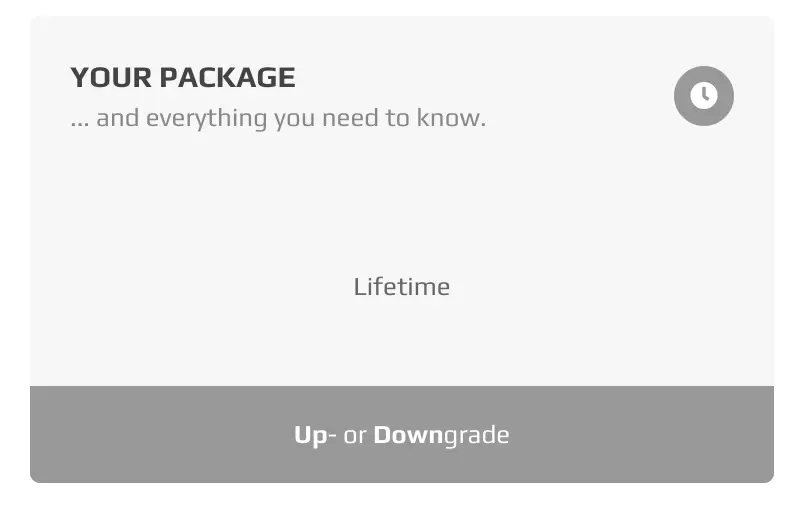
No expiry date. No renewal reminders. No billing cycle to track. That is what lifetime actually looks like inside the panel.
The 3-Month Activity Rule
This is the part that catches people off guard, so it is worth being clear about.
ZAP-Hosting's terms for lifetime products include an inactivity clause. If you do not access your server through the dashboard within any 3-month window, they can mark it inactive and take it offline. After that you get a 4-week grace period to contact them. If you do not, the server is permanently deleted with no refund.
In practice, keeping the server is simple: log into the ZAP-Hosting dashboard and interact with your server once every 3 months. Open it, restart it, check the console. Anything counts.
They email you before anything happens
ZAP-Hosting sends a reminder email before taking any action on an inactive server. You will not lose it without warning. That said, a calendar reminder every 2 months takes 30 seconds to set up and removes the risk entirely.
I understand why this policy exists. Hosting a server costs money in hardware and power even when nobody touches it. An inactivity clause means they are not carrying dead weight from purchases made years ago by people who moved on. If you are actually using the server, this clause will never affect you.
The standard terms around misuse and violations apply to both monthly and lifetime plans equally.
Dashboard
The ZAP-Hosting dashboard is genuinely one of the better ones I have used across hosting providers. Server management, resource monitoring, OS reinstall, console access, and network configuration are all in one place. The layout is clean and nothing important is buried three menus deep.
You can reinstall your OS in a few clicks, access a live browser console without setting up any external tools, and manage everything without needing to SSH for routine tasks. That is useful whether you are just starting out or you have been managing servers for years.
Support and Community
Support is handled through a ticket system and response times have been good in my experience. You get actual replies from people who understand the platform, not copy-paste responses that send you back to the documentation.
The Discord community is worth joining regardless of whether you have bought anything yet. It is active, the ZAP-Hosting team is present in it, and you can get a real sense of how they operate before spending any money. For me, seeing how a company communicates in their community is one of the better signals of what support will actually be like.
Service Quality
Uptime has been solid across my time using them. There have been one or two short periods of downtime in the time I have used the platform, both from external factors and both resolved quickly. That is a normal rate for any hosting provider and not something I would hold against them.
What is worth mentioning is that the platform has visibly improved since I started in 2020. Features have been added, the dashboard has been refined, and the product range has grown. A hosting company that is still investing in the product six years in is one that is worth staying with.
Pros and Cons
Pros:
- Break-even in under 9 months at base spec, free server time after that
- Pay once and never think about renewal again
- Good hardware customization, pay only for what you need
- NVMe storage on all configurations
- Bring your own ISO at no extra cost
- Germany location has strong, game-optimized DDoS protection
- Clean and easy to use dashboard
- Responsive support and active Discord community
- Established company with a track record since 2010
Cons:
- Downgrades are not possible on lifetime plans, size carefully from the start
- 3-month activity check-in required to keep the server
- CPU brand is assigned automatically, no manual selection
- Fewer discount codes available for lifetime vs monthly plans
- US locations currently have lighter DDoS protection than Germany, though PletX is rolling out there soon
What the Critics Say
It is fair to mention that opinions on lifetime VPS hosting in general are mixed across hosting forums and communities. Some concerns that come up are worth addressing honestly:
CPU contention and inconsistent performance. This is a real concern with any shared VPS, lifetime or otherwise. My experience on ZAP-Hosting has been stable, but if you are running something that needs consistent high CPU throughput, any shared VPS environment has limits. Test under your actual workload before committing.
Support quality. I have had good experiences, but support quality can vary. The ticket system is the right route for anything serious. The Discord community is also useful for quick questions.
No refunds on lifetime purchases. This is clearly stated in their terms and is standard for one-time products. There is no getting around it: if you buy and change your mind, the money is spent. That is why I suggest starting monthly first.
"Lifetime" means the lifetime of the service, not yours. True for any lifetime hosting product. ZAP-Hosting has been running since 2010 and shows no signs of going anywhere, but it is a fair thing to keep in mind.
Not suited for production or revenue-generating workloads. I would broadly agree with this. If your business depends on guaranteed uptime SLAs and enterprise-grade support, a dedicated server is a better fit. ZAP's lifetime VPS is excellent for game servers, personal projects, dev environments, and hobby hosting. That is what it is designed for and where it performs well.
None of these concerns have been dealbreakers in my own use, but they are real things to weigh up depending on what you are running.
Who Should Buy It?
Choose Lifetime if:
- You plan to keep the VPS longer than 12 months
- You dislike recurring bills
- Your resource needs are relatively stable
Choose Monthly if:
- You frequently scale resources up and down
- You are testing a short-term project
- You are unsure whether you need a VPS long term
Is It Worth Buying?
It depends on what you are running.
For game servers, personal projects, dev environments, learning Linux, or any long-term hobby setup: yes, the lifetime deal is good value. Break-even is under 9 months, the hardware is solid, and the dashboard and support experience have been consistently good in my use.
For a production website with paying customers, a critical VPN, or anything where downtime costs you real money: a monthly provider with a formal SLA is a safer choice. That is not a knock on ZAP specifically, it is just the honest answer for that use case.
The 3-month activity rule is easy to manage, and the no-downgrade policy means you should size your server thoughtfully from the start.
My honest suggestion: start on a monthly plan the way I did. Spend a couple of months getting comfortable with the platform and confirming it fits your workload. Then switch to lifetime. The math works out quickly and you will know you made the right call before spending the lump sum.
Affiliate disclosure
Some links in this post are affiliate links. Using them may get you a discount on your purchase, and I earn a small commission. Opinions here are based on my own experience with the product.
Check out ZAP-Hosting's current Lifetime VPS pricing through the link above.
Written by
Yuvraj Verma
Yuvraj Verma writes practical guides on hosting, monetization, and game server infrastructure.
His content is built to help creators and hosting businesses launch faster with fewer mistakes.
Next articles
Read these next
ZAP-Hosting ZapX: My Thoughts as a Customer Since 2020
My customer-focused look at ZAP-Hosting ZapX, the new dashboard, beta testing, VPS snapshots, firewall, IPv6, file manager, remote desktop, Cloudflare/DNS sync, AI Shop Assist, and Scale Assist.
Open articleFiveM Server Hosting in 2026: Official Partners Compared
Compare all six authorized FiveM hosting partners in 2026, plus Godlike.host as a budget-friendly FiveM hosting option.
Open articleNodecraft Pro vs Lite: Which Game Server Plan Should You Pick?
A practical Nodecraft Pro vs Nodecraft Lite comparison for Minecraft, Rust, Valheim, Palworld, and casual game servers. Learn when Lite is enough, when Pro is worth it, and what the real tradeoff is.
Open article